
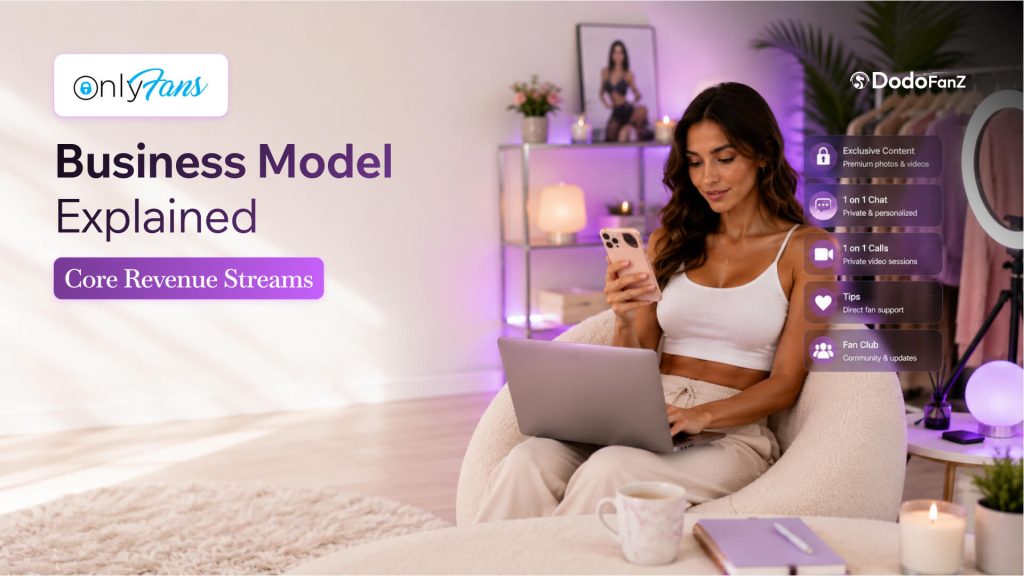

The OnlyFans business model has become one of the most influential examples of the creator economy, proving that creators can build sustainable businesses without relying on advertising revenue. Instead of monetizing attention through ads, OnlyFans enables creators to earn directly from their audiences through subscriptions, exclusive content, tips, and personalized interactions. This creator-first approach has transformed how digital content is monetized and inspired a new generation of subscription-based platforms.
For entrepreneurs, the platform offers valuable lessons beyond content creation. Its success lies in aligning the interests of creators, subscribers, and the platform itself. This guide explains how the OnlyFans business model works, the revenue streams that power its growth, and the key takeaways for founders building creator-focused platforms.
What Is the OnlyFans Business Model?
The OnlyFans business model is built on a direct-to-fan subscription model, where creators monetize exclusive content and personalized experiences instead of depending on advertising algorithms. The platform provides the infrastructure for content hosting, subscription management, payment processing, and creator payouts, while earning a commission on every transaction.
Unlike traditional social media platforms that prioritize views and advertising impressions, OnlyFans succeeds when creators generate more revenue. This creates a strong alignment of incentives, encouraging the platform to continuously improve creator tools, audience engagement, and monetization features.
Public reports indicate that OnlyFans has paid billions of dollars to creators while continuing to grow its global creator and subscriber base, demonstrating the scalability of commission-based creator platforms.
Why Has the OnlyFans Business Model Become So Successful?
The rise of the creator economy has fundamentally changed how people consume and pay for digital content. Increasingly, creators want predictable income, stronger audience ownership, and greater control over their businesses rather than relying on ever-changing recommendation algorithms.
OnlyFans addressed these challenges by allowing creators to build recurring revenue directly from loyal subscribers. Instead of chasing millions of followers, creators can focus on nurturing smaller but highly engaged communities that are willing to pay for exclusive access and personalized interactions.
This shift from attention-based monetization to relationship-based monetization is one of the biggest reasons the platform has become a benchmark for creator-first businesses.
How the OnlyFans Revenue Engine Works
OnlyFans generates revenue by taking a percentage of creator earnings across multiple monetization channels. Every transaction benefits both the creator and the platform, creating a scalable business model where platform growth is directly tied to creator success.
| Revenue Stream | How It Works | Platform Revenue |
| Monthly Subscriptions | Fans pay recurring membership fees | Commission on subscriptions |
| Pay-Per-View Content | Creators sell premium content separately | Commission on purchases |
| Tips | Fans voluntarily support creators | Share of each transaction |
| Paid Messaging | Subscribers pay for private interactions | Transaction commission |
| Custom Content | Personalized content requests | Commission on sales |
| Livestreams | Paid events, gifts and live interactions | Share of livestream earnings |
Because revenue comes from multiple sources rather than a single subscription fee, creators can increase their lifetime earnings while the platform benefits from higher transaction volume.
Six Core Revenue Streams Behind OnlyFans’ Success
1. Monthly Subscriptions
Recurring subscriptions form the foundation of the OnlyFans business model. Creators set their own monthly prices, giving subscribers continuous access to exclusive content and community interactions. Predictable recurring income helps creators forecast earnings, invest in better content, and build long-term businesses while improving subscriber retention.
2. Pay-Per-View (PPV) Content
Subscriptions provide access to regular content, but premium experiences are often sold separately through pay-per-view messages and exclusive releases. This allows creators to monetize their most valuable content without increasing subscription prices.
Common PPV offerings include:
- Exclusive videos
- Behind-the-scenes content
- Limited-time releases
- Premium content bundles
3. Tips and Fan Support
Tipping provides one of the simplest ways for fans to support their favorite creators. Whether rewarding exceptional content or celebrating milestones, voluntary tips strengthen creator-audience relationships while generating additional revenue without requiring new subscriptions.
4. Paid Private Messaging
One of OnlyFans’ strongest differentiators is personalized communication. Fans are often willing to pay for direct conversations, exclusive replies, or customized interactions that create a stronger sense of connection than traditional social media platforms can offer.
5. Custom Content Requests
Personalized content commands premium pricing because it delivers experiences tailored to individual subscribers. Custom videos, personal shout-outs, and exclusive requests create another high-value revenue stream while strengthening fan loyalty and increasing customer lifetime value.
6. Livestream Monetization
Live experiences continue to play a growing role in creator monetization. Paid livestreams, virtual gifts, premium events, and live tipping encourage real-time engagement while creating urgency that recorded content often cannot replicate.
Why This Business Model Works Better Than Traditional Advertising
Unlike advertising-driven platforms that depend on maximizing impressions, OnlyFans focuses on helping creators generate direct revenue. This creates healthier incentives for everyone involved.
| Advertising-Based Platforms | Creator Monetization Platforms |
| Revenue depends on advertisers | Revenue comes directly from fans |
| Algorithm visibility determines earnings | Loyal communities drive earnings |
| High dependence on platform algorithms | Greater audience ownership |
| Unpredictable creator income | More stable recurring revenue |
By reducing dependence on advertising, creators gain more control over their businesses while platforms benefit from stronger retention and higher transaction volumes.
Lessons Founders Can Learn from the OnlyFans Business Model
The biggest takeaway isn’t subscriptions alone – it’s building multiple monetization opportunities around engaged communities. Platforms that rely on a single revenue stream often struggle to maximize creator earnings or retain top talent.
Founders developing creator platforms should focus on:
- Diversifying monetization through subscriptions, tips, digital products, livestreams, and premium experiences.
- Making creator success the primary KPI, since platform growth naturally follows when creators earn more.
- Building direct audience relationships instead of relying heavily on algorithmic content discovery.
- Prioritizing recurring revenue, which creates predictable cash flow for both creators and the platform.
- Providing ownership and flexibility, allowing creators to control pricing, content, and engagement with their communities.
These principles have become the foundation of many successful creator economy businesses beyond OnlyFans.
The Future of the OnlyFans Business Model
The next generation of creator platforms is expanding beyond subscriptions into broader creator ecosystems. Community memberships, AI-powered personalization, digital product sales, creator education, livestream commerce, and integrated marketplaces are becoming increasingly important sources of revenue.
While monetization methods will continue evolving, the core philosophy behind the OnlyFans business model remains unchanged: empower creators to build sustainable businesses through direct relationships with their audiences. Platforms that continue investing in creator success, community engagement, and diversified monetization are likely to shape the future of the creator economy.
Final Thoughts
The OnlyFans business model demonstrates that the future of digital platforms is built around creator success rather than advertising impressions. By combining recurring subscriptions with multiple monetization channels, personalized engagement, and direct audience relationships, the platform has created a sustainable ecosystem that benefits creators, subscribers, and the business itself.
For founders looking to build an OnlyFans-like platform, the biggest lesson is clear: technology alone is not enough. Long-term success comes from helping creators grow loyal communities and earn meaningful income.
At DodoFanZ, we help entrepreneurs build white-label creator platforms with subscription management, creator monetization, livestreaming, digital product sales, and scalable infrastructure designed for the next generation of the creator economy.
Frequently Asked Questions
What is the OnlyFans business model?
OnlyFans follows a direct-to-fan subscription model where creators earn through memberships, premium content, tips, livestreams, and personalized interactions while the platform earns commissions on transactions.
How does OnlyFans make money?
The platform generates revenue by taking a percentage of creator earnings from subscriptions, PPV content, private messaging, tips, livestreams, and other monetization features.
Why is the OnlyFans business model successful?
It combines recurring revenue, diversified monetization, direct audience relationships, and creator-focused incentives instead of relying primarily on advertising.
Can a creator platform succeed without advertising?
Yes. Many modern creator platforms generate sustainable revenue through subscriptions, memberships, digital products, virtual gifts, and premium community experiences.
What is the biggest lesson founders can learn from OnlyFans?
The strongest creator platforms prioritize creator earnings, audience ownership, and multiple monetization channels rather than depending on a single source of revenue.
