


Short dramas offer a different way to watch entertainment. Instead of sitting through a full-length movie, viewers can follow a story through short episodes on their phones. This format makes it easy to watch during a break, while commuting, or whenever there is a little free time.
DramaBox is a mobile app built around short dramas and mini TV series. It offers content discovery, personalized recommendations, in-app purchases, and subscription options. Its app listing also describes ways to earn free coins through certain activities, including watching ads.
But how does Short Drama App like DramaBox turn short episodes into a business? The answer lies in how it gives viewers access to content, encourages them to keep watching, and earns money through different payment options.
This article explores the DramaBox business model, its main revenue streams, user engagement strategies, and Business Model Canvas to explain how the short-drama app operates and generates income.
What Is DramaBox and How Does It Work?
DramaBox is a short-drama streaming app that gives viewers access to mini-series across different genres. Users can browse available titles, watch episodes, and find other dramas through trending content and personalized recommendations.
The platform’s main difference from traditional streaming services is its focus on short-form episodic storytelling. Instead of building the viewing experience around full-length films or longer television episodes, it offers stories divided into shorter installments.
The viewing process is straightforward. A user opens the app, chooses a drama, and starts watching. Depending on the title and the access options available, some episodes may be free while others may require coins or an eligible subscription.
DramaBox is operated by STORYMATRIX PTE. LTD., according to its app store listing. The company also describes its content as original drama shorts and exclusive mini TV series.
Also Read: ReelShort Business Model Explained
How Does the DramaBox Business Model Work?
DramaBox combines short-drama content with a mobile viewing experience and paid access options. Its business model connects three main activities: making content available, helping viewers find stories they enjoy, and offering ways to access premium content. The process can be understood in four steps.
The process can be understood in four steps.
- Content attracts viewers. The platform offers short dramas that users can browse and watch through its app.
- The app supports content discovery. Trending titles and personalized recommendations help users find stories that interest them.
- Access options support monetization. Depending on the available offer, viewers can use coins, purchase a subscription, or access eligible content through free options.
- Content and technology require ongoing investment. The platform needs to maintain its app and streaming service while securing or producing content for viewers.
These activities are connected, but they serve different purposes. Content gives people a reason to use the app, discovery helps them find something to watch, and monetization provides ways for the business to earn revenue.
DramaBox’s internal financial arrangements are not fully disclosed publicly, so its exact revenue mix and profitability cannot be established from its app listing alone.
How Does DramaBox Make Money?
DramaBox’s publicly listed payment options include in-app purchases and subscriptions. Its app listing and developer responses also describe free coin rewards associated with activities such as watching advertisements.
The platform has also generated substantial in-app purchase revenue. According to Sensor Tower’s State of Short Drama Apps 2026 report, DramaBox generated close to $140 million in global in-app purchase revenue in Q1 2026.
These figures show the scale of DramaBox’s paid content business, although they do not reveal how much revenue comes from coins versus subscriptions. To understand its monetization approach, it helps to look at each payment option separately.
1. In-App Purchases and Paid Episode Unlocks
DramaBox uses virtual coins for eligible content access. Users can purchase coins and use them to unlock premium episodes, while certain activities may provide opportunities to earn coins without buying them.
This payment method allows viewers to pay for access to individual episodes or other eligible content instead of committing to a recurring subscription.
For example, someone who wants to continue a particular drama may prefer to unlock its available premium episodes. Another viewer who watches regularly may find a subscription more suitable.
The coin system also gives the platform a way to connect purchases with content access. However, the cost of coins and the number needed to unlock episodes can vary. Current prices and requirements should be checked directly in the app.
2. Subscription Plans and Premium Access
DramaBox also offers subscription options. According to its app listing and developer responses, a subscription can provide broader access to dramas than purchasing coins for individual episodes.
This approach can suit viewers who regularly watch multiple series and prefer a recurring payment rather than making separate purchases.
Subscriptions can generate recurring revenue for a business, but they do not guarantee that users will keep paying. The platform needs to maintain content that subscribers find worth returning for.
The exact subscription benefits, prices, and availability can vary by market and offer. These details should be verified through the current purchase screen rather than assumed to be identical for every user.
3. Advertising and Free Viewing Options
Advertising is another part of the app’s viewing experience. DramaBox’s app listing identifies advertising as a feature, and its developer responses mention earning free coins by watching ads.
Rewarded advertising gives users an alternative to purchasing coins for eligible content. The platform can also offer paid access for viewers who prefer not to rely on free rewards.
The financial value of advertising depends on factors such as the number of ads served, advertiser demand, and the revenue earned per ad. DramaBox does not publicly disclose enough information to calculate how much it earns from advertising.
It is also important to distinguish advertising-related features from confirmed revenue figures. The presence of ads does not reveal how much advertising contributes to the company’s total income.
How Does DramaBox Attract and Retain Users?
A streaming app needs people to discover it, start watching, and return for more content. DramaBox’s app listing describes trending content and personalized recommendations, which help users find dramas within the platform.
Short-drama businesses can also use promotional clips and social media campaigns to introduce stories to potential viewers. A brief scene can give someone a sense of the plot and encourage them to look for the full series.
Once viewers start watching, the stories themselves become important to retention. Suspense, character conflicts, and episode endings can encourage people to continue watching. However, these are general storytelling techniques, not proof that any particular marketing campaign has succeeded.
Personalized recommendations can help viewers find another drama after finishing one. Notifications may also inform users about relevant content or updates, depending on the features available.
For the business, the important question is whether these activities lead to sustained viewing and paying customers. Downloads alone do not show whether people keep using the app or whether the revenue from those users covers the cost of acquiring them.
DramaBox Business Model Canvas Explained
The Business Model Canvas provides a clear overview of how DramaBox operates as a short-drama streaming platform. It highlights its target audience, the value it offers through short-form stories, the channels it uses to reach viewers, and the ways it generates revenue. It also outlines the key resources, activities, partnerships, and costs involved in running and growing the platform.
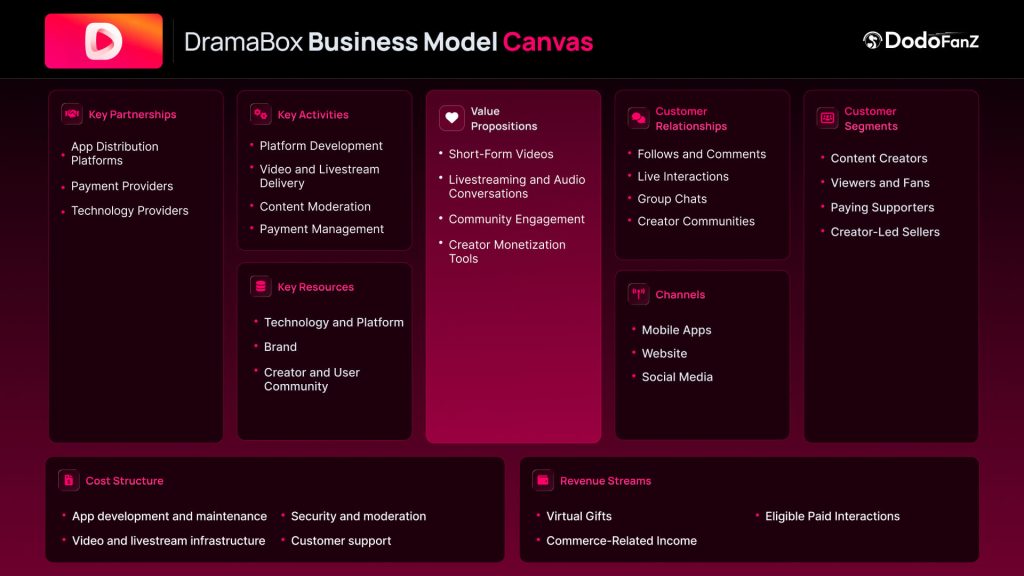
| Business Model Canvas Block | DramaBox Business Model |
| Customer Segments | Short-drama viewers, free users, and paying customers |
| Value Propositions | Short dramas, convenient mobile viewing, and personalized recommendations |
| Channels | Mobile app and app store distribution |
| Customer Relationships | Personalized recommendations, in-app rewards, and customer support |
| Revenue Streams | In-app purchases, coin-based episode access, and subscriptions |
| Key Resources | Drama library, content rights, app, and streaming technology |
| Key Activities | Content management, streaming, platform maintenance, and marketing |
| Key Partnerships | Content creators, production companies, and payment providers; specific partnerships require verification |
| Cost Structure | Content production or licensing, technology, streaming, marketing, and operations |
What Does the Business Model Canvas Tell Us?
DramaBox’s business model connects short-drama content with mobile streaming and paid access. Its success depends on attracting viewers, encouraging continued engagement, and managing operating costs.
Want to Build Your Own Short Drama Streaming App?
Inspired by the DramaBox business model? If you’re planning to enter the short-drama market, DodoFanz offers a ready-made platform to help you get started. Its DramaBox Clone includes mobile apps for Android and iOS, an admin panel, and an optional web platform.
You can offer short dramas and mini-series through on-demand streaming while choosing monetization options that fit your business goals. These include VIP subscriptions, coin-based episode unlocks, in-app purchases, and advertising. Features such as content management, user accounts, personalized viewing, and platform branding help you manage the service under your own brand.
Conclusion
DramaBox’s publicly visible business model combines short-drama streaming with in-app purchases, coin-based content access, and subscriptions. Its app also includes advertising-related features and personalized content discovery.
The wider business depends on making content available, helping viewers find stories, and offering access options that suit their preferences. At the same time, a streaming platform must manage content rights, technology, customer acquisition, and ongoing operations.
For entrepreneurs, the key lesson is to plan the content strategy, monetization model, and operating costs together. Studying DramaBox can provide a useful starting point, but a new platform needs its own audience research and financial planning.
Frequently Asked Questions (FAQs)
1. Is DramaBox available worldwide?
DramaBox is available in multiple markets, but its content library, subscription prices, payment options, and availability may vary by country.
2. How Long Are DramaBox Episodes?
DramaBox focuses on short-form storytelling, with episodes designed for quick viewing. Episode lengths vary by series, allowing viewers to follow stories in short sessions.
3. What types of dramas are available on DramaBox?
DramaBox offers short-form series across genres such as romance, family drama, suspense, and revenge. Its available titles may change as new content is added.
4. How does DramaBox recommend dramas to viewers?
DramaBox offers personalized recommendations to help users discover content. However, the platform has not publicly detailed the exact algorithm behind its recommendations.
