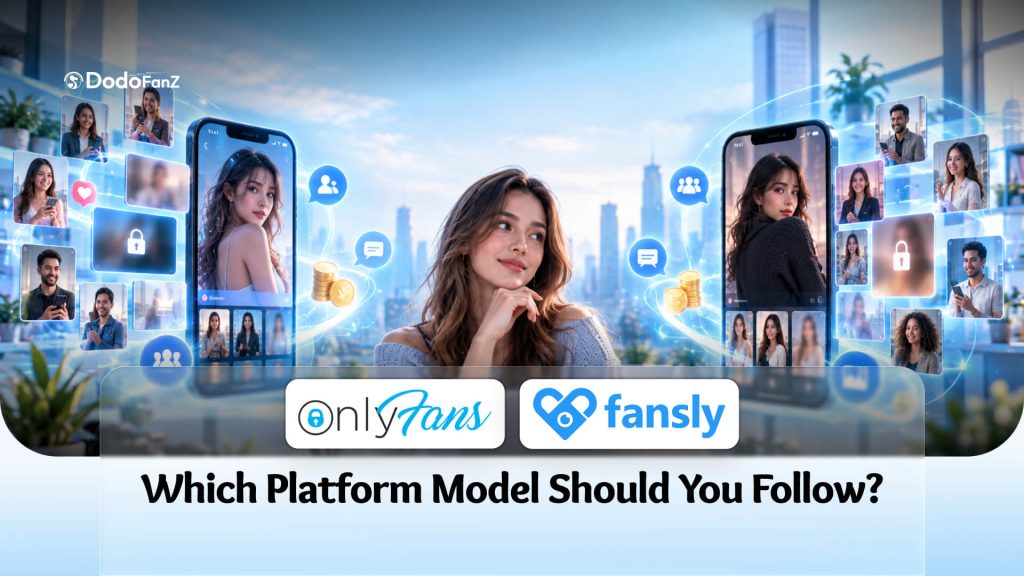

If you’re looking at the creator economy as a business opportunity, OnlyFans and Fansly are hard to ignore. But the more useful question isn’t simply what these platforms offer.
It’s how they make the creator-fan relationship work.
Where do creators come from? Do they bring their own audience? How do fans find new creators? What makes someone pay for a subscription instead of just following for free? And once they become a paying fan, what keeps them around?
OnlyFans and Fansly have taken slightly different approaches to these questions. That makes them useful examples if you’re working on your own creator platform and trying to figure out what your model should look like.
OnlyFans vs Fansly: Key Differences at a Glance
The creator economy is already a massive market. Goldman Sachs Research estimated its value at around $250 billion and projected it could reach $480 billion by 2027, with roughly 50 million creators worldwide. With more creators looking for ways to monetize their audiences, there is a lot for founders to learn from platforms that already operate in this space.
OnlyFans and Fansly may serve a similar audience, but the way they approach monetization and discovery isn’t exactly the same.
| Factor | OnlyFans | Fansly |
| Core model | Creator-to-fan subscription platform | Creator-to-fan platform with subscriptions and multiple monetization options |
| Main monetization | Subscriptions and paid creator content | Subscriptions, PPV, tips, paid messages and livestreams |
| Fan discovery | Creators can rely heavily on their existing audiences and external promotion | Built-in discovery features help users find creators |
| Subscription options | Paid access to creator content | Multiple subscription tiers and customizable access |
| PPV content | Available as an additional monetization method | Integrated into posts and messages |
| Creator growth | Strong focus on creators monetizing their existing audiences | Combines creator monetization with internal discovery |
| Key lesson for founders | Keep the creator-fan relationship simple | Give creators more ways to monetize and grow |
The biggest takeaway? Both platforms are helping creators make money from their audiences. The difference is in how much of that work comes from the creator and how much comes from the platform.
That difference becomes important when you’re deciding how your own business should work.
How the OnlyFans Business Model Works
The basic OnlyFans model is pretty straightforward.
A creator has an audience. They publish content for that audience, and fans pay to access it or interact with them. The platform handles things like profiles, content, subscriptions, payments, and messaging.
The platform doesn’t have to produce the content itself. That’s one of the reasons this type of business can scale. Creators are responsible for the content and their relationship with their audience, while the platform provides the infrastructure around it.
But there’s a problem every creator marketplace runs into. You need creators before fans have a reason to join. But creators also need fans before they have a reason to stay.
If creators are expected to bring most of their audience with them, you’ll need a strong reason for them to use another platform in the first place. That could be better monetization, better tools, a particular niche, better support, or simply a different experience.
So before worrying about how many features your platform needs, think about why a creator would actually want to use it.
How the Fansly Business Model Works
The Fansly model is built around a similar creator-to-fan relationship, but gives creators more flexibility in how they make money and how fans find them.
Creators can let people follow them for free and then offer paid subscriptions. They can also set up different subscription tiers with different access or benefits. The other noticeable difference is discovery.
Fansly has a For You Page, creator suggestions, tags, hashtags, and search that help users find content and creators within the platform. Its FYP uses user activity and interests to recommend content.
That changes things for creators. They don’t have to rely entirely on an audience they already have on another social platform. There is a path for people who don’t know them yet to come across their content.
That raises an important question for anyone working on a similar product. Do you expect creators to bring their audience, or do you want your platform to help them find one?
There’s no reason every creator platform has to make the same choice. But the answer will affect your product, your marketing, and the kind of tools you’ll need.
How OnlyFans and Fansly Make Money
The next thing to look at is how creators actually make money on these platforms.
Subscriptions are important, but they’re not the only option. Giving creators several ways to earn can make the platform more useful to different types of creators and fans.
Subscriptions and Recurring Revenue
Subscriptions are the easiest model to understand.
A fan pays regularly to access a creator’s exclusive content or other benefits.
For a creator, recurring payments can make income easier to plan around than relying entirely on individual purchases. Fansly also allows creators to offer different subscription tiers.
But adding more tiers doesn’t automatically mean more revenue. If the difference between each tier isn’t clear, fans have little reason to choose one over another.
If you’re planning a similar model, the question isn’t how many subscription plans you can add. It’s what each plan gives the fan that they actually want.
Pay-Per-View Content
Some fans don’t want a monthly subscription. They may only want a particular piece of content. That’s where PPV comes in!
Instead of making someone subscribe, creators can charge for individual locked content. Fansly supports locked media in both posts and direct messages.
For a platform, this gives creators another way to make money from people who may not become long-term subscribers. It’s also useful for fans who want more choice over what they pay for.
Tips and Paid Messages
Tips are another simple way for fans to support creators.
Paid messages add another option by letting creators charge for certain content or interactions sent through messaging. Fansly supports tips through profiles, posts, messages, and livestreams. Its messaging system also supports locked content.
This can make a difference because not every fan behaves in the same way. One person may want a monthly subscription. Another may buy individual content. Someone else may prefer sending a tip.
Giving creators room to handle those different behaviors can make the same audience more valuable.
Livestream Monetization
Livestreams bring the creator-fan relationship into real time. Creators can interact directly with their audience while using features such as paid messages and tips to monetize those interactions.
Fansly supports monetization during livestreams as well as controls around viewing and chat access.
If livestreaming is part of your product, there is more to consider than the video itself. You also need moderation, payments, access controls, chat tools, reporting, and ways for creators to manage the session.
What Makes These Platforms Work?
Having lots of features doesn’t guarantee that a creator platform will work.
You need people on both sides of the marketplace. Creators need reasons to join. Fans need reasons to sign up and spend money. And both need reasons to keep using the platform.
Creator Acquisition
Getting the first group of creators is one of the hardest parts.
A creator who already has thousands of followers on Instagram, TikTok, YouTube, X, or another platform may not want to start from zero somewhere else. So you need to give them a reason.
Maybe your platform is built for a particular niche. Maybe the monetization is better suited to their audience. Maybe your discovery system gives smaller creators a better chance of being seen. Whatever you choose, it has to be something creators actually care about. “Come to our new platform” isn’t enough.
Fan Discovery
Then there’s the other side of the problem.
Once creators are there, how are fans supposed to find them?
You could leave discovery mostly to the creators and expect them to bring their own followers. That keeps the product simpler, but it also means the creator is doing most of the audience-building work. Or you can make discovery part of the platform itself.
Search, categories, tags, recommendations, feeds, and creator suggestions can help users find people they didn’t already know.
Fansly has taken more of this approach.
If you go down this route, discovery isn’t just another feature. It becomes part of the reason creators may choose your platform.
Fan Retention
Getting a fan to subscribe is one thing. Keeping them subscribed is another. Creators need ways to keep their audience interested after that first payment.
Exclusive content, messages, PPV, livestreams, tips, and regular updates can all help, but the creator ultimately needs control over how they use those tools.
The experience also needs to stay simple enough that fans understand what they’re paying for. If the product becomes confusing, adding more monetization options won’t necessarily help.
What Founders Can Learn From OnlyFans and Fansly
Looking at both platforms side by side makes a few things clear.
What the OnlyFans Model Shows
The biggest thing to take from the OnlyFans approach is simplicity.
The creator has an audience. The platform gives them a way to monetize that audience. You don’t necessarily need a complicated product to get that basic relationship working.
If you’re starting with a focused niche, a straightforward subscription experience may be enough to get the business moving before you start adding more features.
What the Fansly Model Shows
Fansly shows what happens when you give creators more ways to earn while also giving them tools to reach people inside the platform.
Subscriptions, locked content, tips, messages, livestreams, and internal discovery give creators more options.
That can make the platform useful even for creators who don’t already have a huge following somewhere else.
What You Should Adapt
You don’t need to follow either platform in every detail.
Start with the audience you want to serve and work backward from what they actually need. If creators already have strong audiences, you may not need to put as much emphasis on internal discovery.
If you’re targeting smaller or newer creators, discovery could be much more important. If subscriptions are enough for your niche, keep the monetization simple.
If creators need several ways to earn, PPV, tips, paid messages, and livestreams may make more sense. The model should decide the features, not the other way around.
Which Platform Model Should Your Business Follow?
There isn’t one model that will make sense for every creator platform. The right choice depends on who you’re serving and how you expect the business to make money.
A Subscription-Focused Model
This approach keeps the main experience around recurring subscriptions.
You would focus on creator profiles, exclusive content, recurring payments, subscription management, and communication between creators and fans. It makes sense when the main idea is simple: fans pay regularly to access a creator’s content.
A Flexible Monetization Model
Here, subscriptions are only one part of the business. You can also give creators PPV, tips, paid messages, livestreams, and different subscription tiers.
This gives creators more ways to earn from the same audience. It can also suit fans who don’t want to commit to a recurring payment but still want to purchase individual content or support a creator.
A Discovery-Focused Model
If helping creators find new fans is a major part of your idea, discovery needs more attention.
Search, recommendations, categories, tags, creator suggestions, and personalized feeds can all become important parts of the experience.
But there’s a trade-off. Once creators start depending on your platform for audience growth, your discovery system becomes a much bigger responsibility.
A Hybrid Model
You can also mix these approaches.
For example, you could keep subscriptions simple while adding PPV, tipping, and internal discovery. That gives creators more ways to earn without making the product depend entirely on one revenue stream.
It also gives you more room to adjust the product as you learn what your creators and fans actually use.
How DodoFanZ Helps Founders Launch a Creator Platform
Ready to turn your creator platform idea into a real product?
With DodoFanZ, you can build an OnlyFans-like platform designed around subscriptions, exclusive content, and direct creator-fan relationships. It gives you a foundation for creating a branded platform where creators can monetize their existing audiences.
You can also build a Fansly-like platform with more flexible ways for creators to earn and fans to interact with their favorite creators. This can include different subscription options, PPV content, tipping, paid messaging, and livestream monetization.
Whether your idea is closer to the OnlyFans model, the Fansly model, or a mix of both, you can shape the platform around your own audience, niche, branding, and business goals.
Ready to build your creator platform? Get started with DodoFanZ.
Final Takeaway
OnlyFans and Fansly are useful to study because they show two different ways of handling the same basic creator-to-fan relationship.
OnlyFans puts more emphasis on creators monetizing their existing audiences through a straightforward model.
Fansly gives creators more monetization options while also putting more emphasis on finding creators within the platform. You can take ideas from both approaches without following either one exactly.
Before deciding what your platform should look like, figure out where your creators will come from, how they will make money, how fans will find them, and what will make those fans stay.
Once those answers are clear, the feature list becomes much easier to work out.
FAQs
1. What does it take to build a platform like OnlyFans or Fansly?
Building one requires creator profiles, subscriptions, payments, content management, messaging, security, moderation, analytics, and a scalable backend designed around your chosen business model.
2. How do creator platforms make money beyond subscriptions?
Creator platforms can generate revenue through transaction fees, PPV purchases, tips, paid messages, livestreams, premium features, advertising, and other services offered to creators.
3. How can a new creator platform attract creators?
A new platform can attract creators through niche positioning, better monetization options, creator incentives, direct outreach, referral programs, and tools that provide clear value.
4. What technology is needed to build a creator subscription platform?
A creator platform typically needs secure payments, user authentication, content storage, messaging, notifications, analytics, moderation tools, scalable infrastructure, and web or mobile applications.
